Showing posts with label advice. Show all posts

Saturday, January 26, 2013

Please wait, the Revolution is Loading...

We are on the brink of a new cultural revolution, and it truly has the potential to change the very fabric of society, for better or worse. The facilitator of this change is social media, and while this prediction has been around for quite some time now, it's important that we know what we are getting ourselves into. There is no question that we, as socially motivated creatures, have an instinctual desire to be validated, to share our experiences, and to communicate our beliefs with one another. But now that we have established these complex and versatile social networks with which we satisfy these desires, the question is:

How can we maximize the potential for social media to improve society?

Undeniabley, social media provides us with some of the immediate, superficial satisfactions that we sometimes have difficulty finding in face-to-face interactions, but at what point do we have to start asking whether we are doing ourselves a disservice by not further exploring the collective benefits that this technology offers. For some perspective, consider these facts:

  • Total time spent on social media in the U.S. across PCs and mobile devices increased 37 percent to 121 billion minutes in July 2012, compared to 88 billion in July 2011.
  • 51% of people aged 25–34 used social networking in the office, more than any other age group.
  • On average, 47% of social media users engage in social care behavior.
  • One in six higher education students are enrolled in an online curriculum.
  • A person's social media activity often can reveal signs of mental illness that might not necessarily have emerged in a session with a psychiatrist.
  • People in Egypt (2011) used Facebook to organize meetings and communicate details of their political revolution.
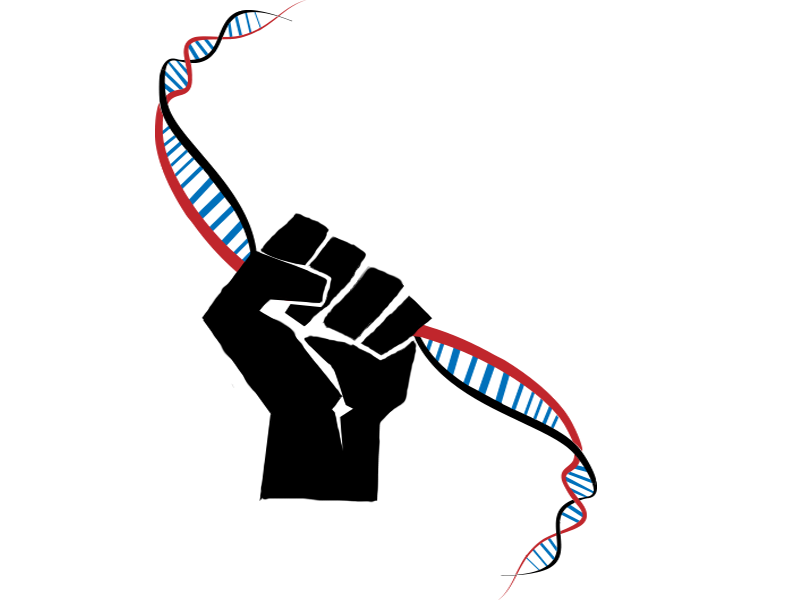
These facts highlight one thing: social media is quickly becoming the only effective way for our global culture to organize itself and function. It started with young people watching funny videos on Youtube and listening to new music on Myspace, but it quickly changed into a resource for dating, a way to advertise products and run businesses, a more effective method for newsreporting, and, similar to what I'm doing right now, a new way to express personal ideas and have more people hear them. It has become the face of social democracy, and now it has become the face of mankind's future.

To be clear, there is work to be done now to ensure that we steer this revolution towards progress instead of regression. As an example, the LGBT community has been fighting for civil equality for decades, but recently they have celebrated an unexpected increase in public support. One theory I have about this success is that there was an increased presence of LGBT lifestyles in social media as compared to mainstream media because it is, by its nature, created by the people instead of for the majority. Surely, then, there is unrecognized potential for social media to facilitate human rights efforts.

Which brings me to my next point: overall political involvement has seen a marked increase in recent years, and I doubt that's because more people actually care. My theory here is that it's easier for the general public to digest serious information from social media because it mixes it with entertaining bits of mindlessness. I mean, how often could you watch a video of a kitten playing with a shoelace directly after reading a heavy article on foreign policy back when we got our kicks from reading the newspaper? Never.

While social media has enormous potential, it also has an evil dark side that is begging to be manipulated. Now, ideas are powerful, and that's especially true when there is limited access to alternative ideas. The problem with mainstream media is that it can pick and choose the content it provides and the way that it portrays that chosen information. This creates a bias and biases in public opinion become dangerous weapons against personal freedoms. It's the same danger that is found in corporate monopolies wherein one company, in the absence of competition, has the power to manipulate prices to increase their profit. In this case, ideas are the currency and our minds are what could become manipulted. The fear is that as these social networks become more powerful, there is a certain level of self-interest they begin to develop to maintain their power. Censorship becomes the enemy here, and this enemy is rapidly becoming the arch-nemesis of the social media revolution. It may appear as "promoted" stories or refusals to integrate their network into "sharing" apps, but censorship can appear in many ways.

Governments have two options when it comes to censorship:
Support it or Prohibit it and I think you can ascertain which option I support. It took public support to convince the US government to break apart the monopoly of the Bell Telephone Company in the late 1800's, and it's essential that we learn of the dangers of social media censorship now before we no longer have such easy access to this information.

Anyway, hopefully I have made a convincing argument that social media has the power to improve our future, and that it's equally important that we maintain the freedom to interact how we choose. The last thing that our culture needs is another method in which the "few" can manipulate the "many". Hopefully, when we can look back on our Facebook timelines, we will judge them as being primitive and undeveloped instead of as representing the peak of social media's potential. I don't know about you, but I truly hope its the latter because I know we can do better than some of the things that show up on my news feed !

Monday, January 21, 2013

To Be Who We Once Were...

            Today, millions of people are tuning in to watch President Barack Obama’s second inauguration.  With so many eyes focused in on the core of our nation, it’s almost impossible not to feel a little proud to be American.  This is a pride that doesn’t come easily for a nation that is just struggling to walk again after the crippling effects that our over-confidence once had. Nonetheless, with the sun shining down on the bleached heart of democracy, it’s hard not to feel a little hopeful about the future. 

            The pressure on our leader and his family today must be crushing. His strength is our strength and the support that his family gives him equally as representative. Yet, the critical eye can’t help but notice the weary look in his eyes. Like the increased proportion of gray in his hair, it indicates to us that he too has suffered from the effects of the last four years. This is comforting to a nation of exhausted workers because the hope in all of our hearts is that today will serve as our re-ignition.

            After today, the torch of progress will be passed to the American people again. The question that should be on all of our minds is, “What can we do differently this time?”  Here are a few thoughts on the possible answer:


·      Much of the progress that has been made thus far has been measured with the sweat and tears of the employed, and while that must continue, there needs to be a larger focus on innovation and new ideas. The world is thirsty for fresh perspectives, and there are countless youth eager to provide them with just that.

·      The gap between the rich and the poor is larger than ever with the rich getting richer over the past four years while the proportion of Americans whom consider themselves to be poor is barely even hitting a plateau in growth. We can no longer afford to preserve their lifestyles while the majority of us are struggling to put food on our tables. More legislation has to be passed that supports those who cannot work and are suffering each day because of their misfortunes.

·      Healthcare must become more universal. I have seen first hand the prejudice that exists towards those without health insurance. We still have people that believe America has the best healthcare in the country while many of our fellow Americans are DENIED treatment because they don’t have enough money to afford insurance. This is barbaric. WAKE UP!!

·      And finally, we have to get a handle on gun control in the coming years. We have had far too many deaths recently resulting from our inaction on this issue. Regardless of what exactly changes, something HAS to happen soon.


            This all may seem like a lot to swallow, but I think that is the message of today’s inauguration: Our work has just begun. The take-away here, though, is that we are all in this together. From the richest to the poorest, the sickest to the healthiest, the oldest to the youngest, we all are Americans, and while the President represents our voice to the world, we all can and do make a difference in shaping that voice. Let’s be who we once were.

Friday, January 18, 2013

The Dark Side of Ideas

    When we believe in an idea with enough intensity, often we develop a strong identification with that idea. An example of this phenomenon is evident when two people have been dating for a while. Usually both people will begin to lose their individual identities in social situations as they adopt a conjoined identity of "we." Their relationship is the idea in this scenario, and it's an idea with which they believe in enough to identify themselves.
    This is a phenomenon that has been studied for centuries and it's one of the major bases of social psychology and, more broadly, sociology. Every effective social movement in history was the result of enough people adopting an idea as their identity. When this happens, though, there is a certain amount of danger that arises too. This is easy to see in the relationship example. When abuse arises in a relationship, the victim of the abuse will often begin to feel guilty or somehow responsible for the abusive behavior of his/her partner because they are so accustomed to associating him/herself with their shared identity. He/she cannot appreciate the actual innocence of his/her seperate identity any longer, and the anxiety of losing part of his/her identity may outweigh the perceived benefit of being safely alone. This is one of the dangers associated with abandoning too much of your own identity in favor of the group's identity; you begin to forego your own well-being for the sustenance of the idea.
     The real issue here is:  
what happens when the leaders of the group become aware of these weaknesses in its members?  
There are two potential outcomes in this situation: the leaders can weaken the intensity of their ideology enough to allow for its members to appreciate their individuality OR (and this is more frequently the case) the group can manipulate these weaknesses towards selfish gain. Take, for example, political involvement in America. America functions under a bipartisan government so we have two main political parties with which politicians associate themselves with based on their ideologies. The problem, here, is that most politicians don't fit perfectly into either party, but luckily for them, there are enough people who identify themselves almost entirely with their political party that they will accept anyone that the party tells them is worthy of supporting. Politicians, to gain the political party's support, will manipulate information and carefully construct the presentation of themselves to the public until they are in office. Once they are in office, though, their actions may not seem as perfectly aligned to their parties ideologies. If enough politicians in the party can sneak these actions without public attention then the ideology of the group will eventually change, too, and this can sometimes be a good thing. But, it can be equally destructive. For instance, the Republican party passes legislation that favors the rich while the majority of its supporters are actually from the lower and middle classes, but this wasn't always the case. When Abraham Lincoln (a Republican) was in office, the party was known for its support of the working class and for its progressive ideology. Over time, though, this changed and the Republican party became the conservative party. 
      My argument here is that we all have to be more careful when we believe in something with enough fervor. While, on the one hand, we would do anything to make others believe in our cause, we have to ensure that we do not begin supporting things that we wouldn't have individually. It's vital that, sometimes, we take a critical look at the things that are being done in the name of our ideas. Just like the victim in the abusive relationship, we have to make sure that the things we believe in so strongly aren't hurting us as individuals.  

Wednesday, January 16, 2013

America, the Addicted

     Next month will make it a full year since I quit smoking cigarettes. For me, this is one of my proudest moments because not only have I proven all of those people wrong who said I couldn't do it, but I have, more importantly, proven that the dark voice of irrational doubt that haunts my self-confidence is not more powerful than my will. Any addict knows how strong that voice can be, and as someone that has always struggled with self-confidence, this is a huge personal win. Now don't worry, this post is not another preachy advice column about "how to quit."  I understand that addiction is a personal thing, and because of that, every person's journey is going to look different. Moreover, the tactics that one uses to quit must be tailored to that person's unique motivations and I prefer to keep those intimate aspects of my personality to myself. My best advice for anyone struggling with addiction would be to see a trained therapist (preferably one who specializes in addiction, but any therapist will work), and they will be able to help you to identify the best plan for you and your lifestyle.  I have included a link at the bottom of this page to a website with a great database of mental health professionals.
       Instead, my goal is to address how poorly our culture handles addicts. In previous posts, I spoke at great lengths about the stigma of mental illness in our society. So as a launching point, keep in mind that mental illness includes addiction. Many people in society tend to treat it as a seperate diagnosis, but, as a personal witness of countless addicts in my life, I know that they often display the same symptoms as any other person with a mental illness, and while treatment is typically much different, the causes are often the same. Now when I talk about addiction, I am talking about my personal definition of addiction: use of a substance that manipulates the brain AND subsequently changes the functioning of the brain in such a way that it results in a physical or mental dependence on that substance to maintain normal brain functioning.  
       What I want you to notice about this definition is that it doesn't indicate any sort of idea that addiction can only happen to weak or evil people. The fact that our minds so easily slip to an image of a dirty criminal when we think of the word "addict" proves just how ubiquitous the criminalization of addiction is in the public consciousness. The fact is that in 2007, alone, an estimated 23.2 million people aged 12 or older needed treatment for a substance use disorder in the United States, and my guess is that the self hatred that most of those individuals suffer from as a result of this criminalization doesn't help their problem. Labeling oneself as a criminal only perpetuates the cycle because as Mahatma Gandhi once said:
"A man is but the product of his thoughts. What he thinks, he becomes.
       If we truly want less criminal activity among drug users then we should focus a little more on reducing prison sentences for these "crimes" and by, instead, offering cheaper rehabilitation options to non-offenders and offenders alike. According to the National Substance Abuse Treatment Services Survey, the average cost for inpatient programs was about $7,000 per month. Since more than 30 days produces a higher recovery rate, the cost of drug rehab can easily range between $7,500 and $75,000.  To me, this is ridiculous. I understand that it costs a lot of money to provide quality treatment to these individuals, but I feel like using our tax money to pay at least a portion of these costs would be cheaper in the long run than the cost of repetitively paying for prison stays of repeat drug offenders. No matter how its defined, though, drug and alcohol addictions are a huge problem. A problem that is highly specific to the American culture. I personally blame our inefficient system of negative reinforcement, but maybe you disagree. Feel free to share your thoughts about this topic in the comments below!

Resources for those struggling or those who know someone struggling with drug addiction: 
http://www.allaboutcounseling.com/

Tuesday, January 8, 2013

Imagination is Power

"Live out of your imagination, not your history."
-Stephen Covey-

Any frequent "daydreamer" knows that it's not unlikely to sometimes miss entire conversations going on around you due to the mental energy being used inside your own mind to create your artificial environment. It's this ability to shut down entire sensory modalities in order to utilize our brains' ability to create entirely original ideas that sets us apart from other, less-inteligent animals. This ability to create new information using recombined bits of our memories is also known as imagination, and it has led mankind into making some of its greatest achievements. In cognitive psychology, one form of human imagination is the combination of several simple parts into more complex new objects, and it is this kind of imagination that is frequently the origin of scientific innovations. The "recombinations" are also what inspires those "ah-ha" moments in our lives. Yet, beyond the realm of invention, our imagination can also be used as a tool with which we can create new experiences in our lives. This is the kind of imagination that inspires those times when you're sitting in your cubicle around 2 PM while your conscious mind is busy sitting on the beach in the Bahamas.


On a more serious note, though, I want to encourage those who are stuck in a bad situation or who are unhappy in their lives to use their imagination to their advantage. When I was a child, I read books and wrote my own stories about magical worlds and impossible feats of adventure. Now I understand that this was a way for me to explore the world of possibilities and have limitless "playgrounds" while still being physically situated in rural Tennessee. I know It may not seem very useful in the moment, but, as Einstein once said: "Imagination is everything. It's the preview of life's coming attractions." In other words, our imagination is a method by which we can peer into the future and determine the means by which to attain the goals we envision. So let's take an astronaut, for example. This astronaut often imagines himself as being the first human to walk on Titan, one of Saturn's moons. This astronaut is very passionate about reaching Titan so he starts thinking of all of the conceivable ways in which he could get himself there. Eventually he may combine his knowledge of space travel with other, unrelated bits of information in his memory to create a new method of long-distance space travel that no one else would have been able to conceive. If he had not been able to imagine himself reaching that planet then he may not have attempted to find a way to get there. What's more is that none of society would have been able to benefit from the technology that would result. Had he, at any point, told himself that it was impossible for humans to get to Titan then his uncertainty would have prevented the possiblity from becoming the reality it could have once been. So:


The moment that you lose hope in the possibility of the future you imagine for yourself is, ironically, the same moment that it becomes impossible to attain.

I guess the point I'm trying to make is that you can never lose confidence in the things that you imagine for yourself. Even if the result is, in fact, impossible to achieve. I can guarantee to you that the effect of having hope in itself is worthy of the effort. All I know is that despite the amount of human suffering in the world, there is still a constant forward motion. Things must, by their nature, change and the smartest of us are the ones who know how to direct the motion in their lives. I don't think that people need ultimate control over their lives to be happy, but I do know that hope always gives us strength and I've never seen a situation wherein strength wasn't a powerful ally. So imagine the life you want and don't allow yourself to question the possibility that it can come true. Maybe you will surprise yourself.